Player Pathways from Initial Bonus Claims to Early Addiction Intervention Through Digital Self-Assessment Tools
Katja Zimmermann · Nov 5, 2026
Player Pathways from Initial Bonus Claims to Early Addiction Intervention Through Digital Self-Assessment Tools
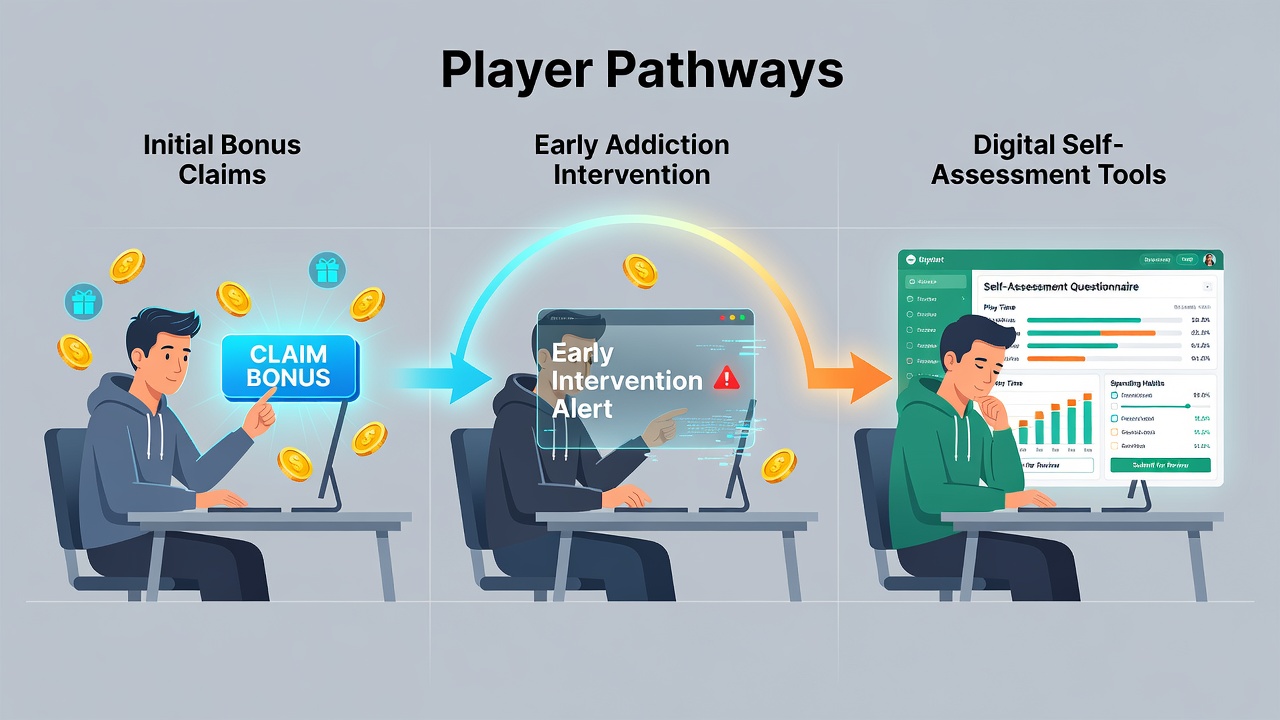
Online gambling platforms often structure bonus offers to encourage initial deposits and extended play sessions, and researchers have tracked how these incentives connect with later patterns of behavior that prompt users toward self-assessment resources. Data from multiple jurisdictions shows that players who claim welcome bonuses or free spins frequently continue engagement through reload promotions, while tracking systems flag changes in deposit frequency or session length that align with risk indicators. In November 2026 several regulatory updates across North America and Europe required operators to integrate self-assessment prompts at defined intervals, creating clearer pathways from bonus-driven activity to early intervention points.
Bonus Structures and Player Entry Points
Deposit match offers and no-deposit free spins represent common starting mechanisms that draw new accounts, and industry reports indicate these promotions account for a measurable share of first-time funding events. Studies conducted by academic teams in Canada and Australia reveal that players accepting such bonuses show higher rates of repeat deposits within the first thirty days compared with non-bonus cohorts, though individual outcomes vary widely. Operators log these sequences through player management systems that record timing between claim, wager, and subsequent funding, producing datasets that later feed into behavioral analytics.
Transition from Promotional Play to Routine Engagement
Once players exhaust initial bonus wagering requirements, many accounts shift toward standard deposit patterns, and operators note that reload bonuses or loyalty points often sustain this phase. Figures released by the Canadian Centre on Substance Use and Addiction demonstrate that a subset of users increases both frequency and stake size after the first promotional cycle, prompting internal alerts when thresholds for time-on-site or net loss are crossed. These alerts operate independently of any diagnostic label yet serve as triggers for optional self-assessment modules embedded in account dashboards.
Digital Self-Assessment Tools in Practice
Self-assessment instruments such as the Problem Gambling Severity Index and shorter screeners adapted for mobile interfaces appear directly within player portals, and developers design them to activate after sustained play periods or following specific bonus redemption sequences. Research published through the National Institutes of Health outlines how brief questionnaires delivered at thirty-day intervals capture shifts in control, preoccupation, and financial impact without requiring external referral. Players receive immediate feedback scores alongside resource links, while aggregated anonymized data informs operator compliance reports submitted to oversight bodies.
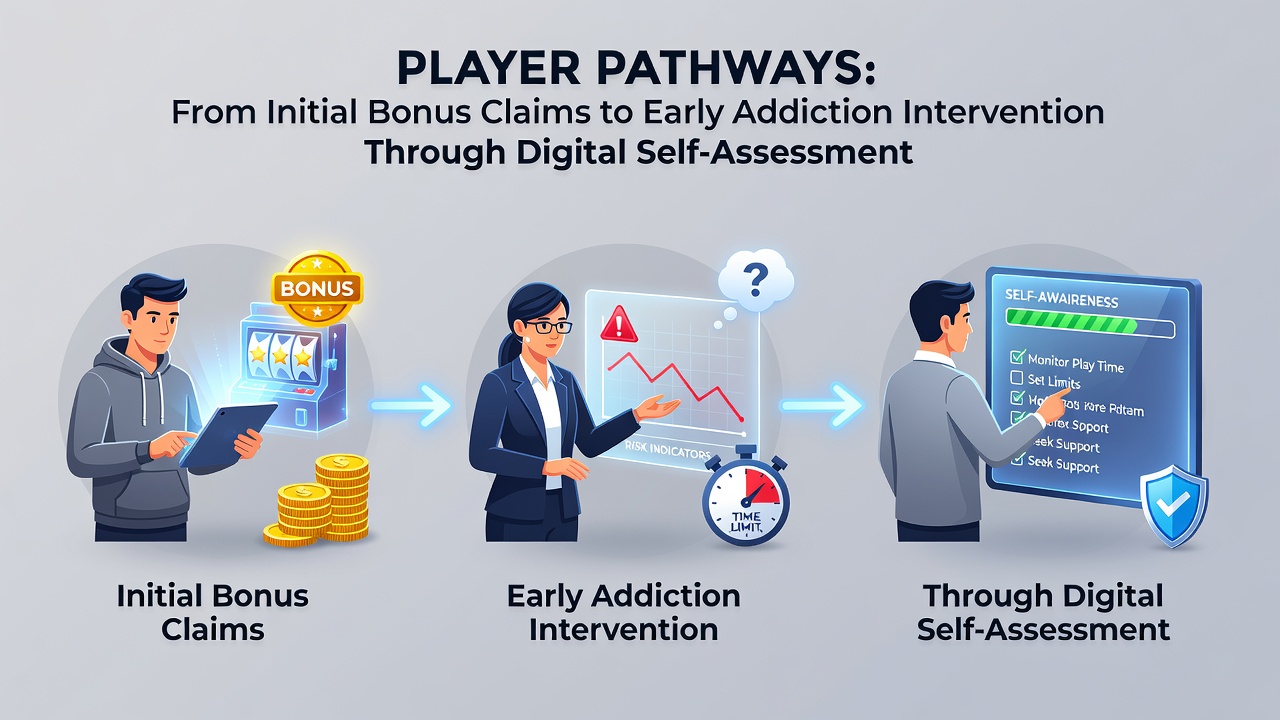
Integration timing matters because prompts placed too early may be dismissed, whereas those appearing after repeated bonus cycles coincide with higher completion rates according to platform telemetry reviewed in European studies. Operators in several provinces and states now embed these tools so that users who have claimed multiple deposit bonuses within a quarter encounter the first questionnaire automatically, reducing reliance on manual outreach.
Pathway Mapping and Intervention Timing
Analytics platforms connect bonus claim logs with subsequent self-test results, allowing operators and researchers to observe sequences where elevated risk scores follow concentrated promotional activity. One dataset compiled by university-affiliated teams in Australia tracked over 40,000 accounts and found that players completing a self-assessment within sixty days of their second bonus claim showed earlier uptake of limit-setting features than those assessed later. These patterns support the placement of assessment invitations at predictable intervals rather than solely in response to crisis indicators.
Regulatory Context and Data Sharing
By November 2026 several licensing authorities required operators to publish anonymized summaries of self-assessment completion rates alongside bonus utilization statistics, creating a feedback loop for policy refinement. Government agencies in Canada and selected Australian states exchange these metrics with academic partners under strict privacy protocols, enabling longitudinal analysis without individual identification. The resulting reports highlight correlations between bonus volume and assessment uptake while underscoring that causation remains multifactorial and dependent on personal circumstances.
Resource Linkage Following Assessment
Completion of a digital screener typically generates tailored suggestions that range from deposit limit adjustments to links for external counseling services, and platform records indicate that users with moderate or higher scores access these resources at measurable rates. Industry associations have developed standardized referral directories that operators must maintain, ensuring consistency across jurisdictions. Observers note that the pathway functions most effectively when assessment results remain confidential to the account holder unless the player elects to share them with support staff.
Conclusion
Player pathways originating in bonus claims and extending through digital self-assessment tools illustrate how operational data and regulatory requirements combine to surface risk indicators at earlier stages. Continued collection of anonymized sequences across regions supplies the evidence base for refining prompt timing and resource delivery, while maintaining separation between commercial activity and clinical support remains a core operational principle.